Key takeaways
- A rear-end hit at commute speed can move the head through a rapid back-and-forth that the neck was not braced for. That is whiplash.
- Bumper damage is a poor proxy for neck load. Modern bumpers are designed to absorb low-speed hits; the occupant still takes the acceleration.
- Headrest height and seat position change the load. If your head was turned, checking a mirror or a phone, the load was uneven.
- Symptoms typically show up the next morning and can build for days. Book the exam inside the week regardless.
- A head that hit the headrest hard, with fog or headache after, is a concussion question for the clinic's TBI lane.
It happens on Highway 40 at Brentwood, on 270 at Dorsett, on 170 at Olive, on 44 at Elm, on 70 at the airport, every weekday morning and evening. Traffic stops. The car behind does not, quite. There is a thud, a jolt, and the specific embarrassment of putting on hazards in the left lane at eight in the morning. Everyone pulls to the shoulder, everyone is fine, everyone is late. Two days later one of them cannot turn their head to back out of the driveway. This page is about that person.
What the hit does
When a stopped car is struck from behind, the seat pushes the torso forward before the head moves. The head lags, then snaps forward to catch up, then rebounds against the restraint. The whole sequence takes a fraction of a second. Whiplash is the common name for the neck injury that results: a sprain or strain of the ligaments and muscles of the cervical spine caused by that rapid back-and-forth motion. It does not require high speed. It requires a difference in speed between two vehicles and a neck that was not braced.
The low back takes load too, especially when the seat is reclined or the lap belt sits high. And the brain, floating inside the skull, takes the same acceleration the head does. You do not need to strike your head on anything for that to matter. The National Institute of Neurological Disorders and Stroke describes traumatic brain injury as resulting from a bump, blow, or jolt to the head; a jolt is enough.
Why the bumper lies
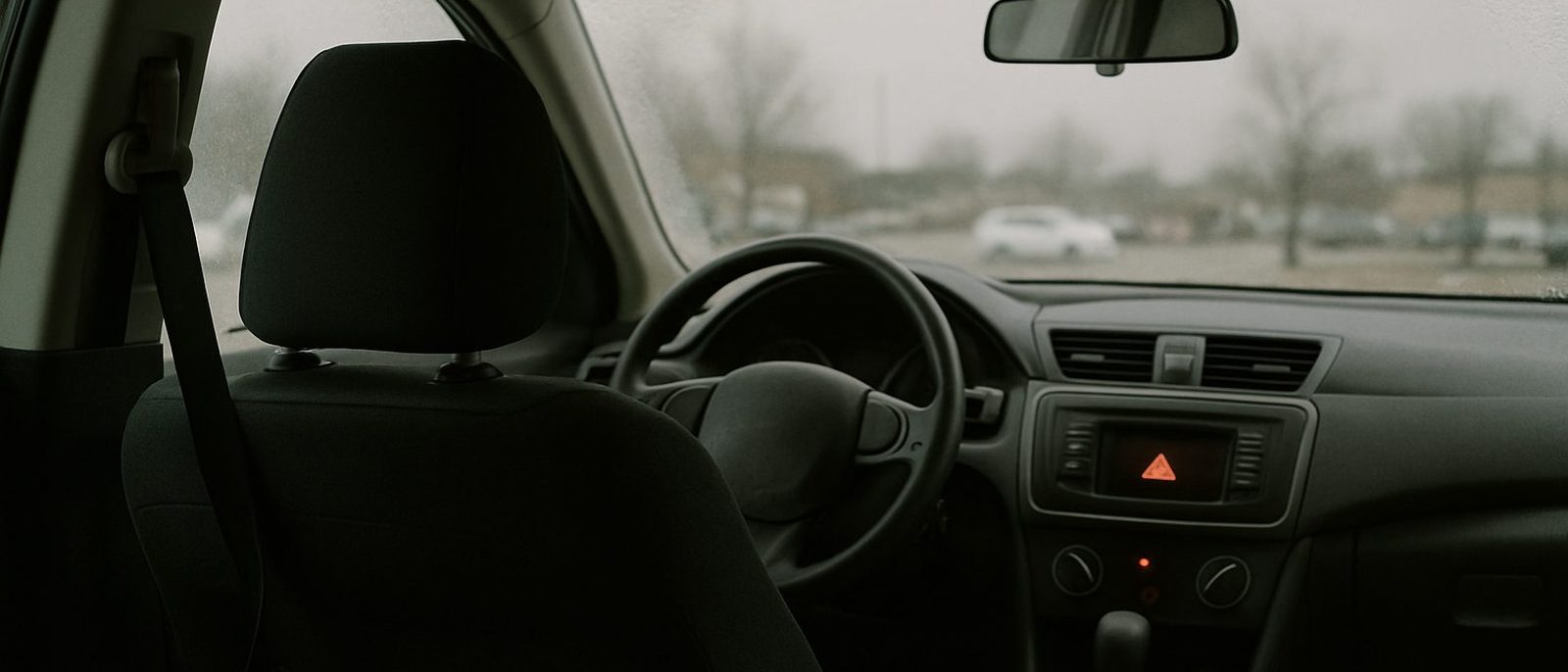
People look at the bumper to decide whether they are hurt. The bumper is designed to look fine after a low-speed hit; that is its job. What the bumper absorbs, the occupant does not feel. What the bumper does not absorb, the occupant does. The two numbers are only loosely related, and the clean bumper in the photograph above tells you nothing about the neck of the person who was in the driver's seat.
The seat, the headrest, and where you were looking
Three small things change the load. First, headrest height: a restraint set well below the top of the head lets the head travel farther before it is caught. Second, seat position: reclined seats let the torso slide and change where the belt sits. Third, head rotation: if you were checking the mirror, looking at a phone, or turning to talk to a passenger when you were hit, the neck took an uneven load, and uneven loads tend to hurt more on one side. Tell the clinician all three. They are part of the history, and the history is the first page of the record.
The next morning
The commute crash follows the same timeline as every crash on this desk, and it is laid out day by day on the week-after guide. The short version: the first night is quiet because adrenaline is a painkiller, the second morning is when the neck reports, and the third day is when any concussion fog shows. Stiffness, a headache that starts at the base of the skull, pain turning the head, pain looking down at a screen, and a sense that the shoulders have been pulled up to the ears are all ordinary reports after a commute hit.
Sore on Wednesday after a Monday hit? That is the exam week. A documented exam this week protects your health and your options.
Start with an exam →What the exam is for
Missouri Injury Clinic publishes its auto injury lane, in any of its three offices, as diagnosis and a treatment plan after a crash. A crash exam at any chiropractic injury clinic typically gets there through a history and an exam of how the neck and back move. For a commute crash, the exam is answering specific questions: which structures are loaded, whether there is a nerve component, whether the head is in the picture, and what the next three weeks should look like. A plan you can read beats the instruction to rest and see.
The clinic's auto injury lane is defined on its own site as diagnosis and a treatment plan after a crash, and its TBI and concussion lane has a named toolset for the head. If the fog is part of your week, say so on the phone. The concussion guide explains what that lane is.
Which office, from which commute
From the Highway 40 commute inside the loop, Hazelwood by I-170 north and Tesson Ferry by I-270 south are comparable drives. From the 270 commute north of Olive, Hazelwood. From the 44 and 55 commutes, Tesson Ferry. From the 70 commute west of the Missouri River, O'Fallon. The corridor guide walks all six spokes. All three offices close from 12 to 2, so the call is a morning call or an after-two call.
What this page is not
It is not a diagnosis and not a prediction of how your neck will do. It is a description of a common mechanism and the week that follows, written so that you call a clinician instead of waiting for the bumper to tell you something. Joseph L. Hollingsworth, DC, is a chiropractor, the clinic is a chiropractic injury clinic, and nothing here is legal advice. You do not need to have decided anything about a claim before you get examined.
Chest pain, a sudden severe headache, weakness or numbness on one side, trouble speaking, a loss of bowel or bladder control, or a head injury with vomiting or worsening confusion is an emergency room trip right now, not a call to a clinic.
Advertising disclosure. This page is advertising. This desk is compensated for featuring Missouri Injury Clinic, and it is not the clinic, not a law office, and not a party to anyone's insurance claim. We publish only the lanes, offices, and hours the clinic publishes on moinjuryclinic.com. We do not write reviews, rank providers, or give medical or legal advice.
Educational only, not medical advice and not a diagnosis. Hours and phone numbers are as published on moinjuryclinic.com; confirm on the call.